
ENG Version – Below
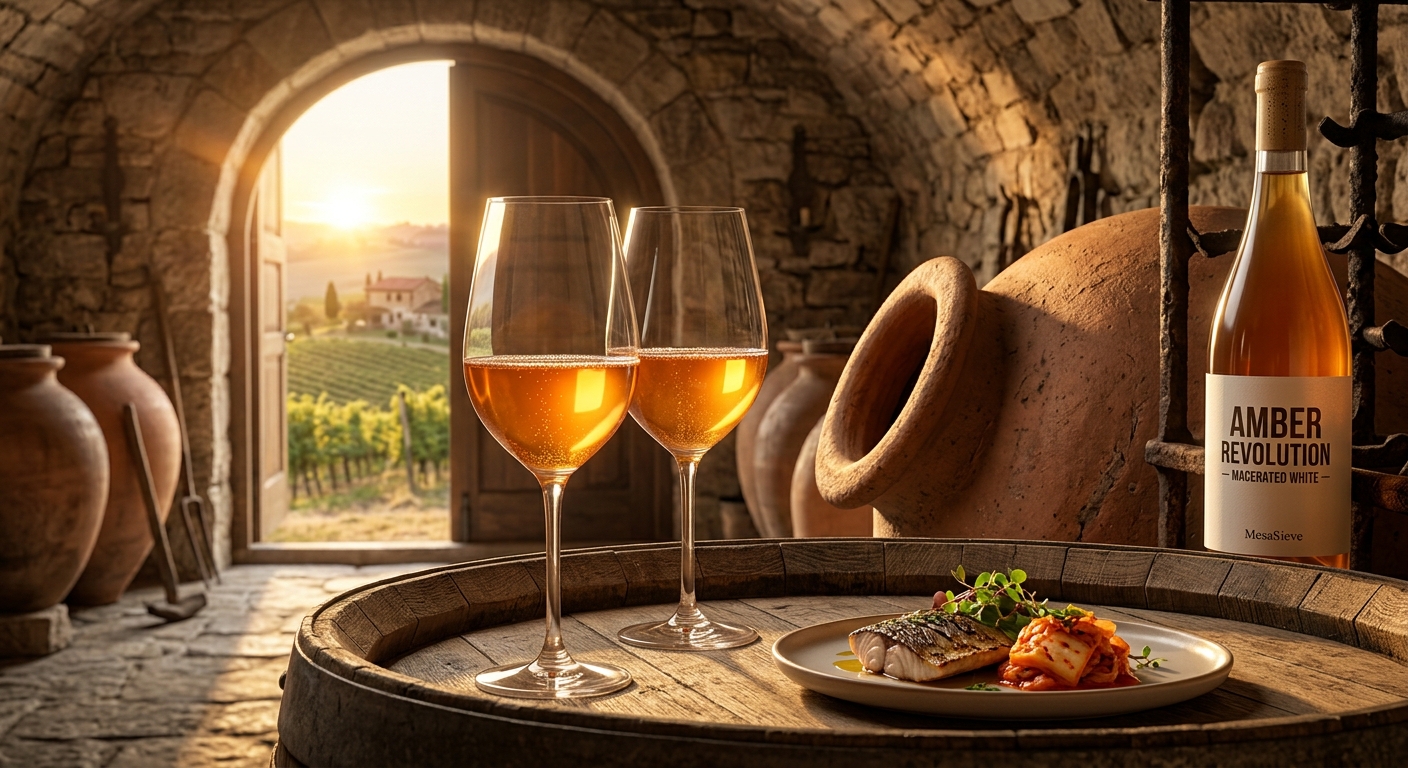
Se siete entrati in un’enoteca o in un bistrot moderno ultimamente, vi sarete accorti di una piccola grande rivoluzione visiva: accanto ai classici ori e rubini, nei calici brilla un colore nuovo. È l’arancione, o meglio, l’ambra.
Gli Orange Wine non sono una moda passeggera costruita in laboratorio. Al contrario, sono il ritorno alla forma più primordiale, istintiva e pura del fare vino. Ma cosa li rende così speciali?
1. Il Metodo: Un bianco “vestito” da rosso
Il segreto dell’Orange Wine è disarmante nella sua semplicità: è un vino prodotto con uve a bacca bianca, ma vinificato come un rosso. Nella normale produzione dei bianchi, il succo viene separato subito dalle bucce. Negli Orange, invece, il mosto fermenta insieme alle bucce (e talvolta ai raspi) per giorni, settimane o addirittura mesi. Questa macerazione estrae colore, aromi intensi e — cosa rarissima per un bianco — i tannini, donando al vino una struttura e una longevità straordinarie.
2. Le Origini e i Pionieri
L’idea nasce nella culla stessa della viticoltura, in Georgia, oltre 8.000 anni fa. Lì, il vino macerava all’interno dei Qvevri, grandi anfore di terracotta interrate per mantenere una temperatura costante. Nel mondo moderno, questo stile era andato quasi perduto, finché a fine anni ’90, sul confine tra Friuli-Venezia Giulia (Collio) e Slovenia (Brda), vignaioli visionari come Joško Gravner e Stanko Radikon decisero di abbandonare la tecnologia moderna per tornare a questa vinificazione ancestrale. Hanno sfidato il mercato e hanno vinto.
3. Le Uve perfette e la Geografia dell’Ambra
Non tutte le uve bianche sono adatte a macerazioni lunghe. Servono bucce spesse e resistenti. In Italia e Slovenia le regine indiscusse sono la Ribolla Gialla, la Malvasia, il Pinot Grigio (che regala tonalità ramate bellissime) e il Trebbiano. In Georgia domina il Rkatsiteli. Oggi la filosofia Orange sta conquistando il mondo intero. Se il nord-est italiano e la Slovenia restano il cuore pulsante, stiamo vedendo capolavori ambrati nascere in Emilia-Romagna e Sicilia, ma anche in Austria (nella regione della Stiria), in Francia (Jura e Alsazia), fino al Nuovo Mondo, con Stati Uniti (California e Oregon) e Australia che stanno investendo enormemente in questo stile “naturale” e a basso intervento.
4. Nel piatto: L’arma segreta dei Sommelier
Grazie alla loro doppia anima (freschezza da bianco, tannino e corpo da rosso), gli Orange Wine sono i “jolly” dell’abbinamento. Sono clamorosi con il sesto senso del gusto (l’umami): perfetti per la cucina asiatica, cibi speziati, curry, kimchi e cibi fermentati. Esaltano i formaggi stagionati, i piatti a base di funghi, le carni bianche saporite e i pesci grassi o affumicati. Lì dove un rosso sovrasterebbe e un bianco sparirebbe, l’Orange Wine trionfa.
Fonti e Approfondimenti
Disclaimer: Questo articolo nasce da un’attenta ricerca ed è il risultato della lettura e sintesi di testi storici, guide enologiche e articoli pubblicati sui seguenti portali di settore:
- Orange Wines – Simon J. Woolf – Il testo di riferimento mondiale sulla storia e i produttori di vini macerati: (Libro: Amber Revolution)
- Gambero Rosso – Guida ai migliori vini macerati in Italia e abbinamenti gastronomici: gamberorosso.it
- Georgian National Wine Agency – Storia dei Qvevri e della viticoltura caucasica tutelata dall’UNESCO: georgianwine.gov.ge
- Raw Wine – Il movimento internazionale dei vini artigianali, naturali e a bassa manipolazione: rawwine.com
Return to Amber: A Journey into the Magical (and Ancient) World of Orange Wines
If you’ve walked into a modern wine bar or bistro lately, you’ve likely noticed a visually striking revolution: alongside the classic golds and rubies, a new color is shining in the glasses. It is orange, or rather, amber.
Orange Wines are not a fleeting fad engineered in a laboratory. On the contrary, they represent a return to the most primal, instinctive, and pure form of winemaking. But what exactly makes them so special?
1. The Method: A White Wine “Dressed” as a Red
The secret behind Orange Wine is disarmingly simple: it is a wine made from white grapes, but vinified like a red wine. In conventional white wine production, the juice is immediately separated from the grape skins. In Orange wines, however, the juice ferments together with the skins (and sometimes the stems) for days, weeks, or even months. This skin contact (maceration) extracts color, intense aromas, and — incredibly rare for a white wine — tannins, giving the wine extraordinary structure and aging potential.
2. Origins and Pioneers
The idea originated in the very cradle of viticulture, in Georgia, over 8,000 years ago. There, wine was fermented inside Qvevri, large clay amphorae buried underground to maintain a constant temperature. In the modern world, this style was nearly lost until the late 1990s, when visionary winemakers on the border of Friuli-Venezia Giulia (Italy) and Brda (Slovenia) — like Joško Gravner and Stanko Radikon — decided to abandon modern technology and return to this ancestral winemaking method. They challenged the market, and they won.
3. The Perfect Grapes and the Geography of Amber
Not all white grapes are suited for long macerations. Thick, resilient skins are required. In Italy and Slovenia, the undisputed queens are Ribolla Gialla, Malvasia, Pinot Grigio (which yields beautiful coppery tones), and Trebbiano. In Georgia, Rkatsiteli rules supreme. Today, the Orange philosophy is conquering the globe. While northeastern Italy and Slovenia remain the beating heart of this movement, amber masterpieces are emerging in Emilia-Romagna and Sicily, as well as in Austria (Styria), France (Jura and Alsace), and the New World, with the United States (California and Oregon) and Australia heavily investing in this “natural”, low-intervention style.
4. On the Plate: The Sommelier’s Secret Weapon
Thanks to their dual nature (the freshness of a white combined with the tannin and body of a red), Orange Wines are the ultimate pairing wildcard. They are spectacular with the sixth sense of taste (umami): perfect for spicy Asian cuisine, curries, kimchi, and fermented foods. They beautifully elevate aged cheeses, mushroom dishes, savory white meats, and fatty or smoked fish. Wherever a red would overpower and a white would disappear, Orange Wine triumphs.
Sources & Further Reading
Disclaimer: This article is the result of thorough research, analysis, and synthesis of historical texts, wine guides, and articles published on the following industry portals:
- Orange Wines – Simon J. Woolf – The global reference book on the history and producers of skin-contact wines: (Book: Amber Revolution)
- Gambero Rosso – Guides to the best macerated wines in Italy and gastronomic pairings: gamberorosso.it
- Georgian National Wine Agency – History of Qvevri and UNESCO-protected Caucasian viticulture: georgianwine.gov.ge
- Raw Wine – The international movement for artisan, natural, and low-intervention wines: rawwine.com